ERMS
The fastest ultrasonic corrosion mapping system
Electromagnetic acoustic transducers (EMAT) Rapid Motion Scanning provides a contactless and couplant-free method of measuring thickness of metals for storage tank, pipes and pressure vessel NDT inspection applications.
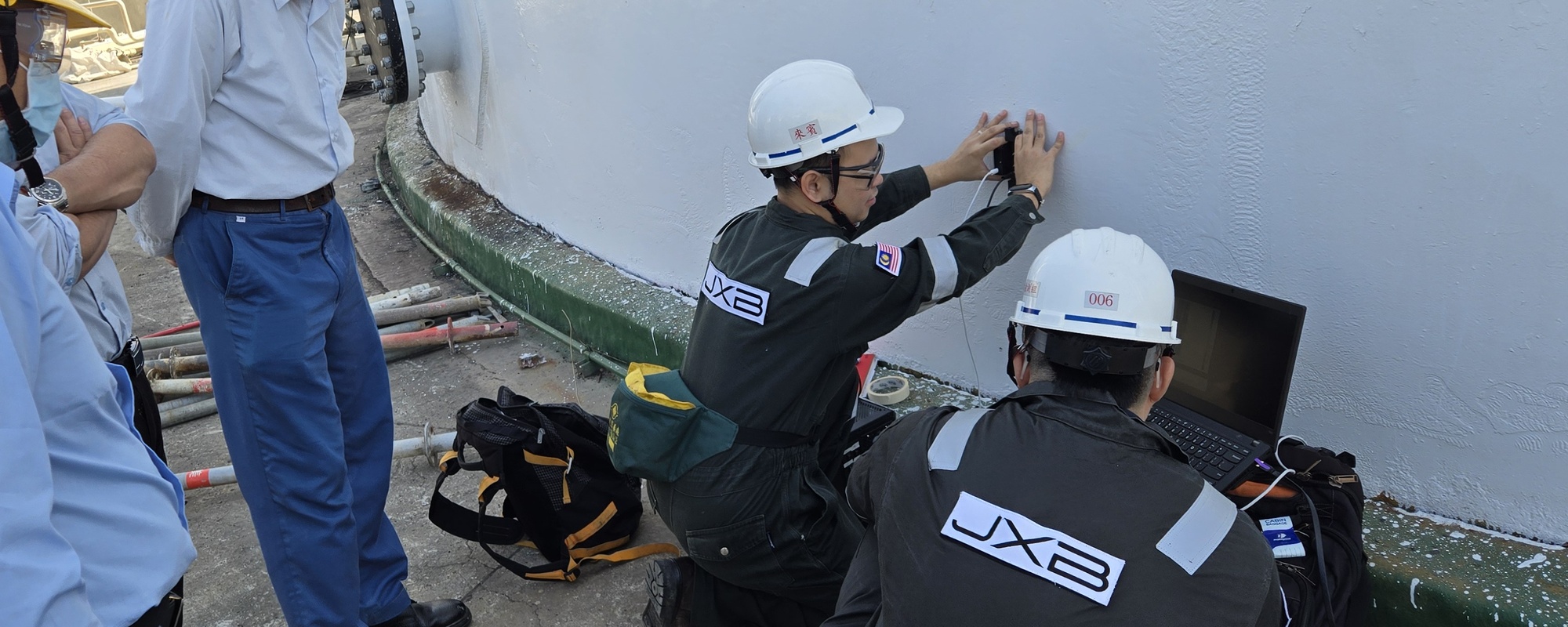
ERMS offers a faster and more practical corrosion mapping solution than PAUT.
The EMAT Rapid Motion Scanner (ERMS) is the first JXB system for fast and reliable corrosion mapping of steel tanks, vessels and pipes.
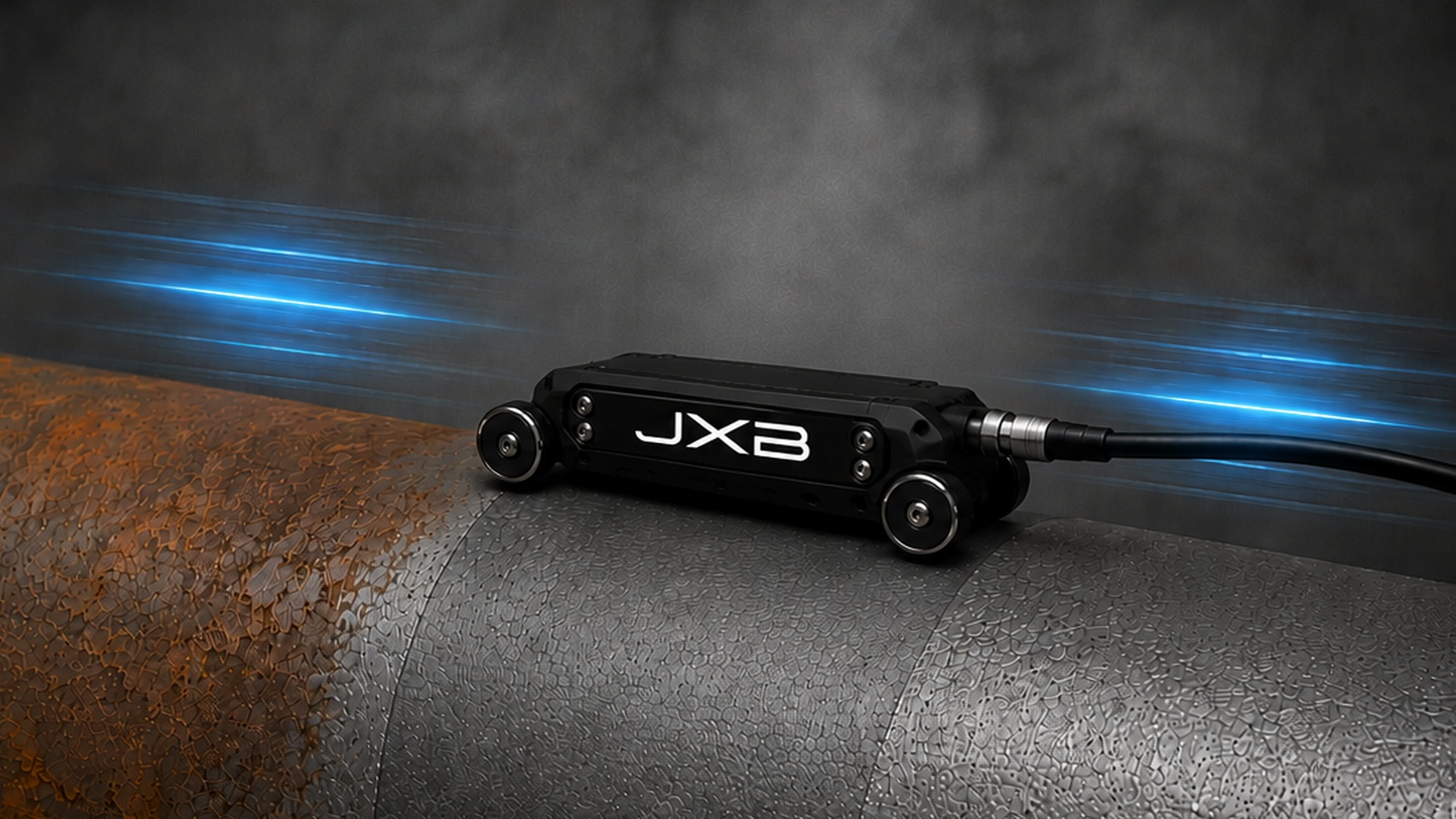
Couplant-free, High Speed Scanning
Unlike conventional UT, EMATs do not require couplant hence less surface preparation is required.
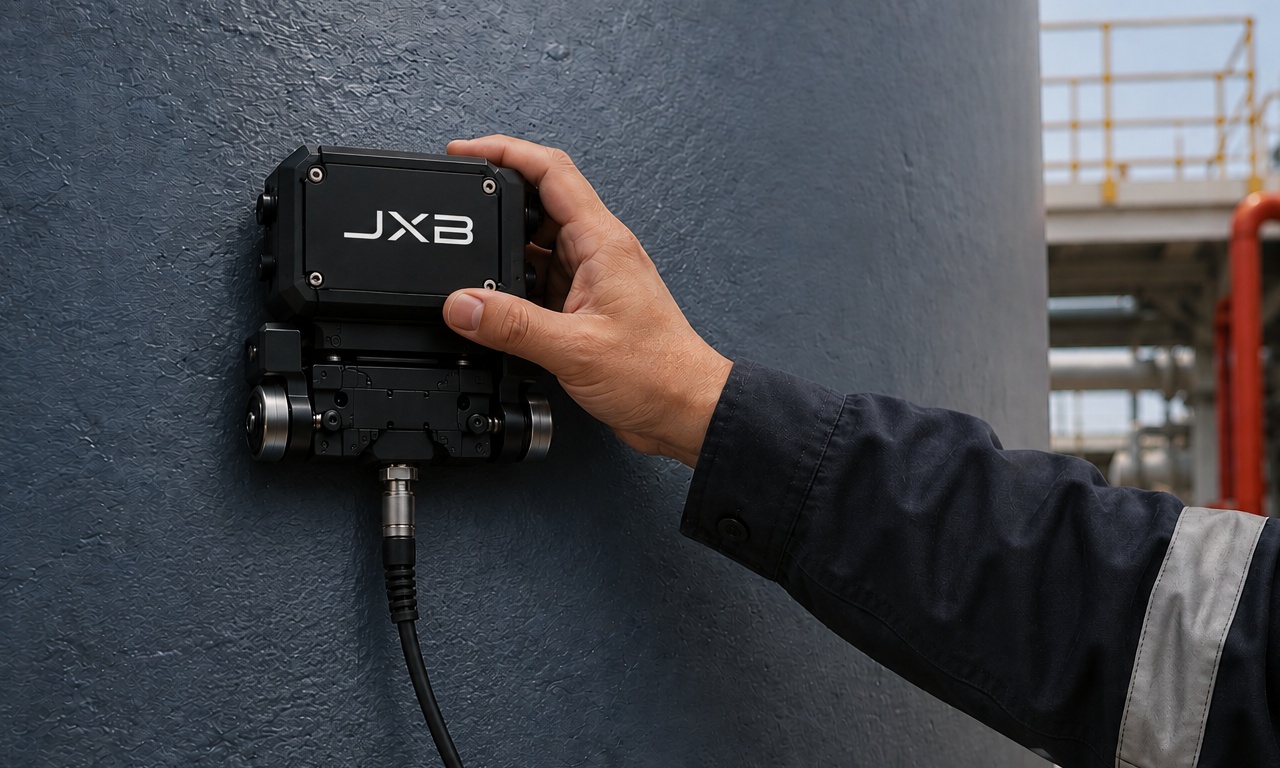
Contactless and repeatable scans
EMAT does not require direct contact with specimen, hence suitable for rough and uneven painted surface.
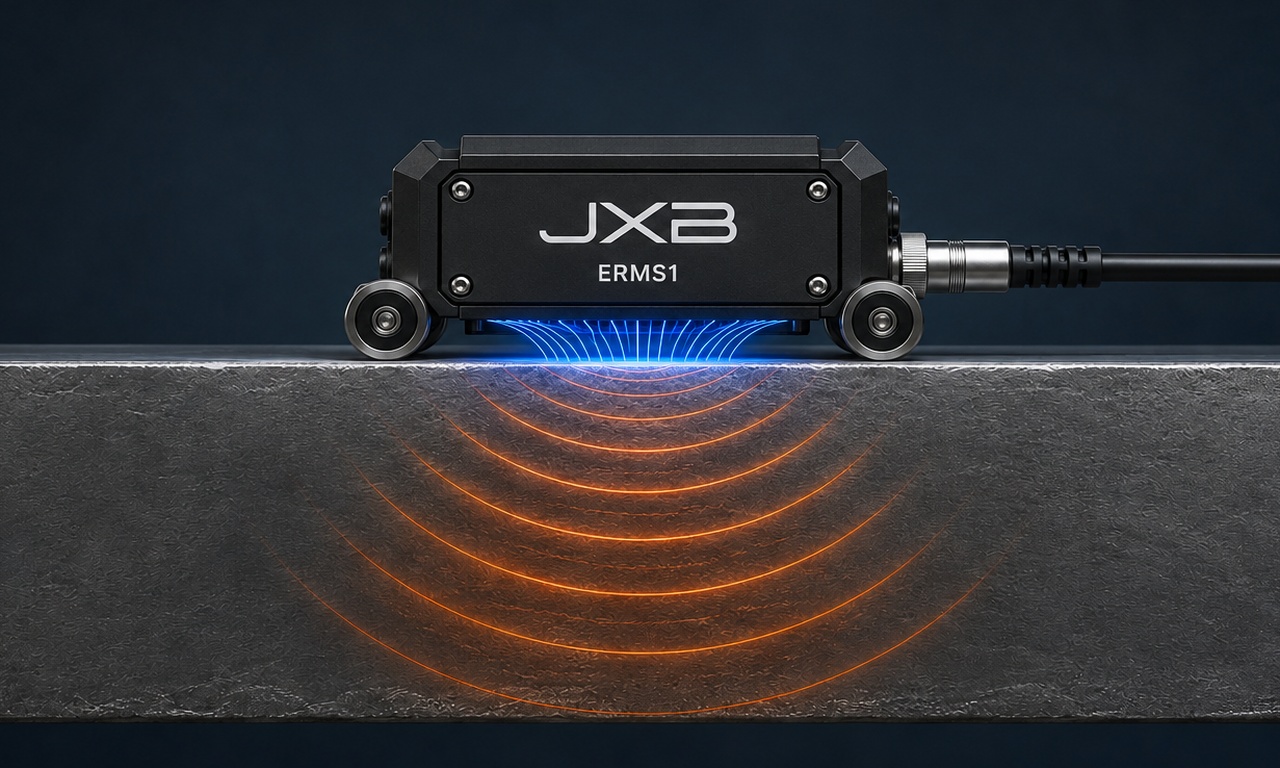
Harmonic wave technology for accuracy
Our harmonic ultrasonic sizing method helps deliver accurate thickness measurements even at high speeds.
How does ERMS work?
The ERMS is fast and simple to use with minimal training.
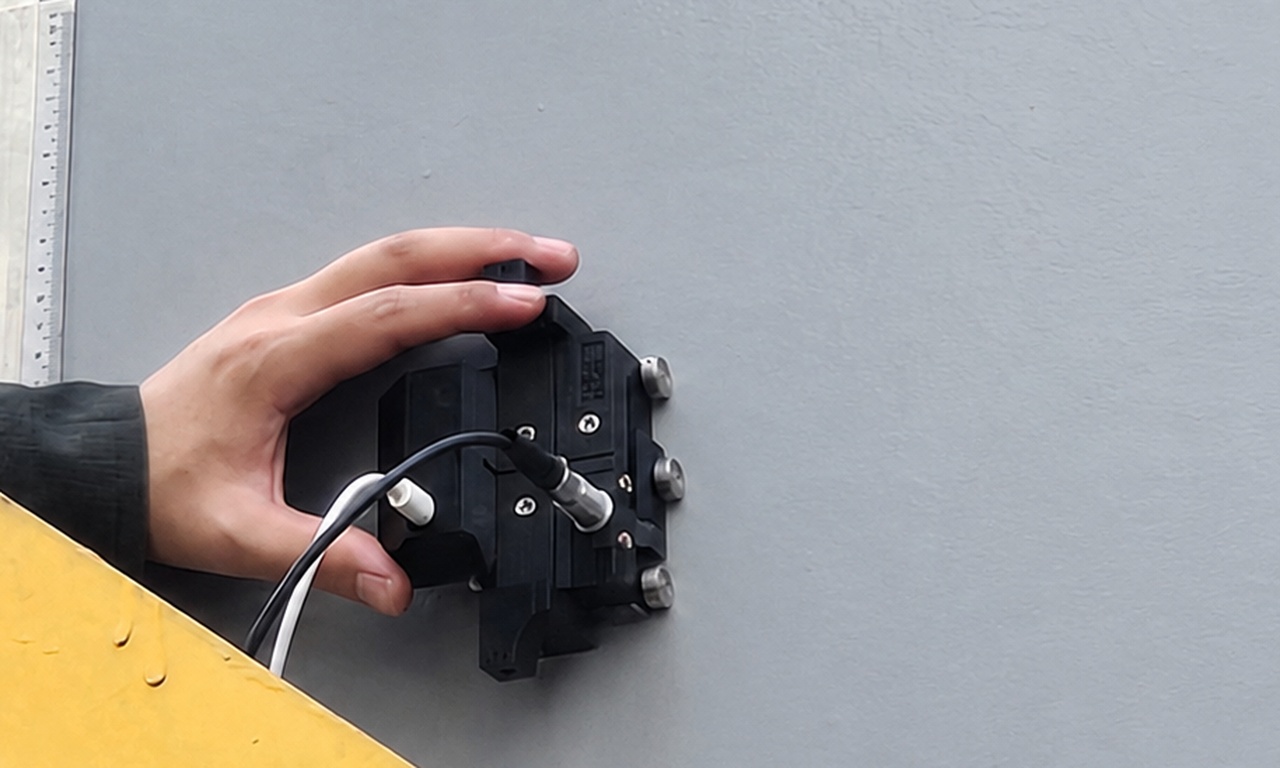
Place EMAT on test surface
Our EMATs are designed to work on metals with coatings and wraps; refer to the probe specifications.
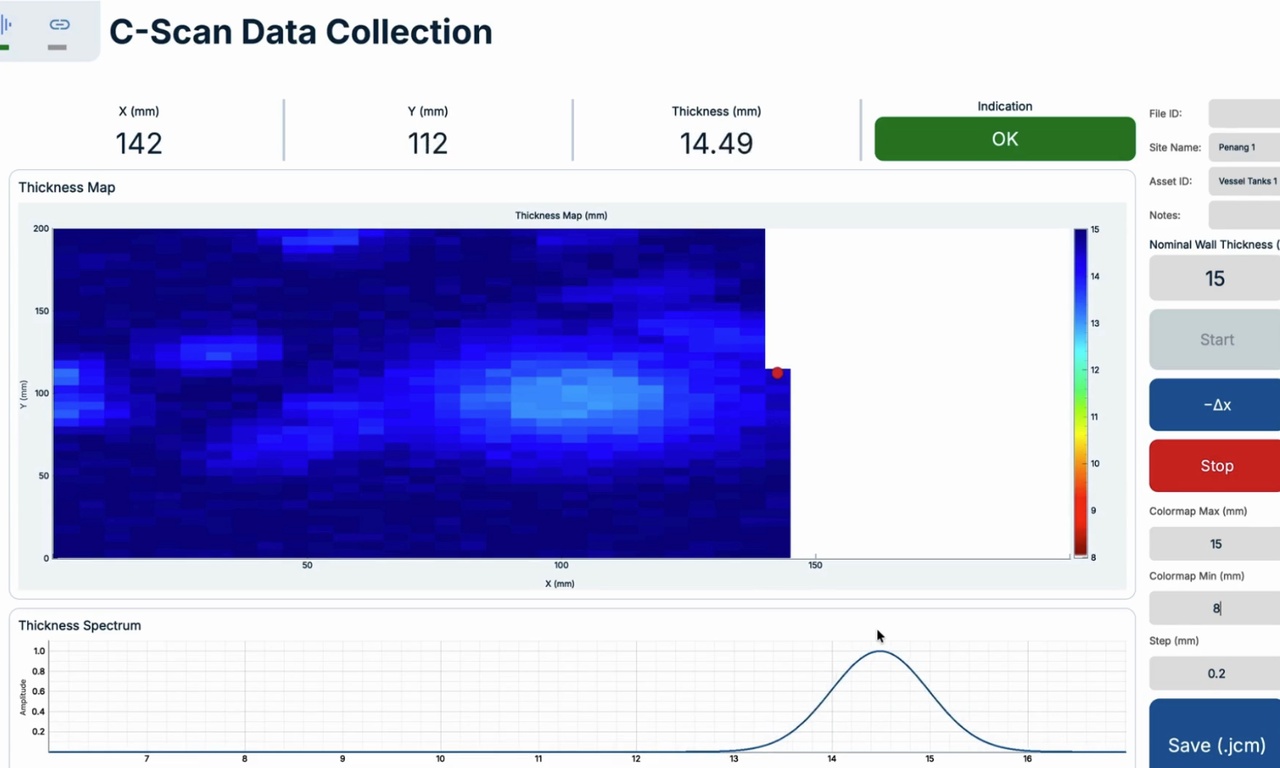
Data Collection
Our ERMS Pro software can automatically choose the optimum configuration for the test subject and seamlessly start data collection within seconds.
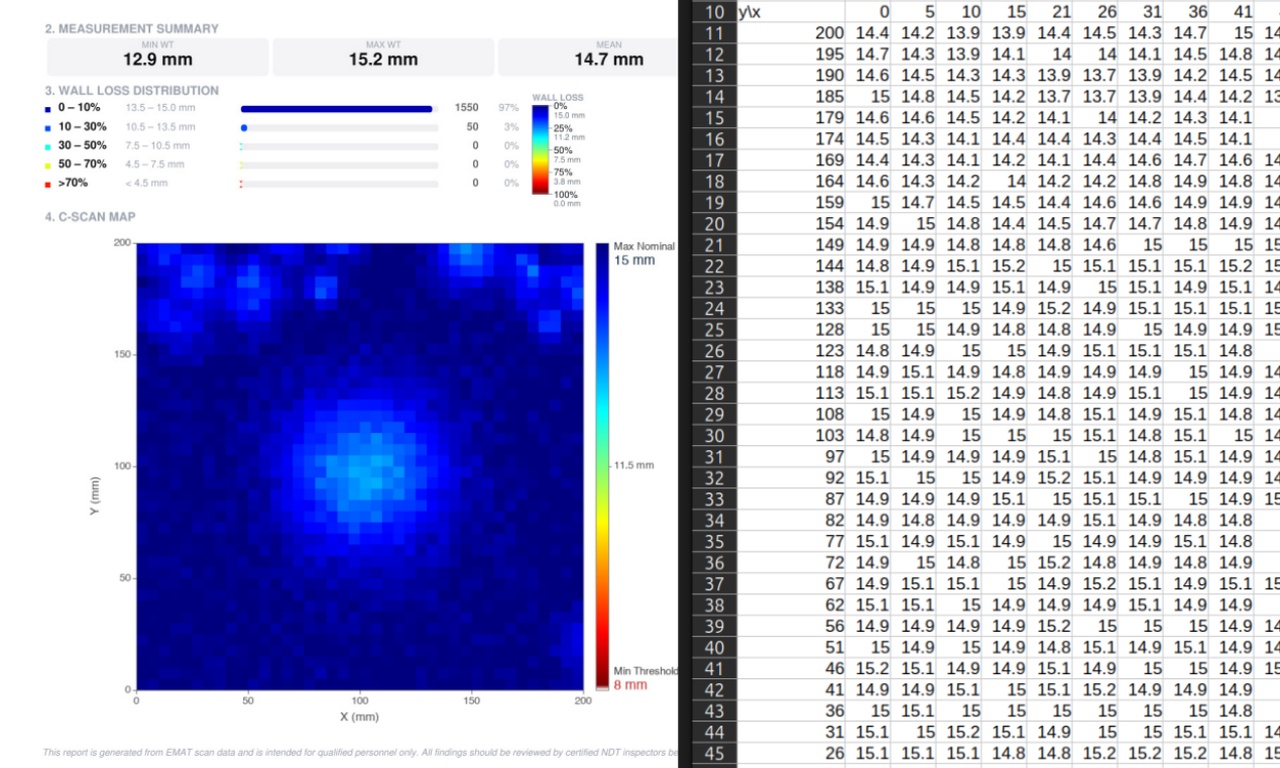
Reporting and Export
Raw thickness maps can be exported into CSV format for use in Excel and Sheets, or use ERMS Pro software to generate your final report in PDF or .DOC.
Operating Specifications
ERMS Specifications
ERMS Box
| Dimension (W × H × D) | 244 x 127 x 290 mm |
| Instrument Weight (w/o battery) | 3 kg |
| Number of channels | 2 |
| Battery | Removable & swappable. No tools required. |
| Typical battery life | 100 continuous C-scans (200mm x 200mm) with 20,000 mAh battery |
| Typical scan speed | 0.05 m/s (4 minutes per 200 x 200 mm C-scan) |
ERMS EMAT
| Features | Shear wave EMAT ultrasound |
| Typical Lift-Off Distance from metal surface | Up to 2.0 mm |
| Applicable nominal wall thickness | 3 mm to 50 mm |
| Minimum detectable wall thickness | 1 mm |
| Test Specimen Materials | Carbon steel, stainless steel & other electrically conductive metals |
| Pipe Diameters | 2" and above |
| Test temperatures | -20 to 70°C (continuous contact) |